
Applied Ecclesiology
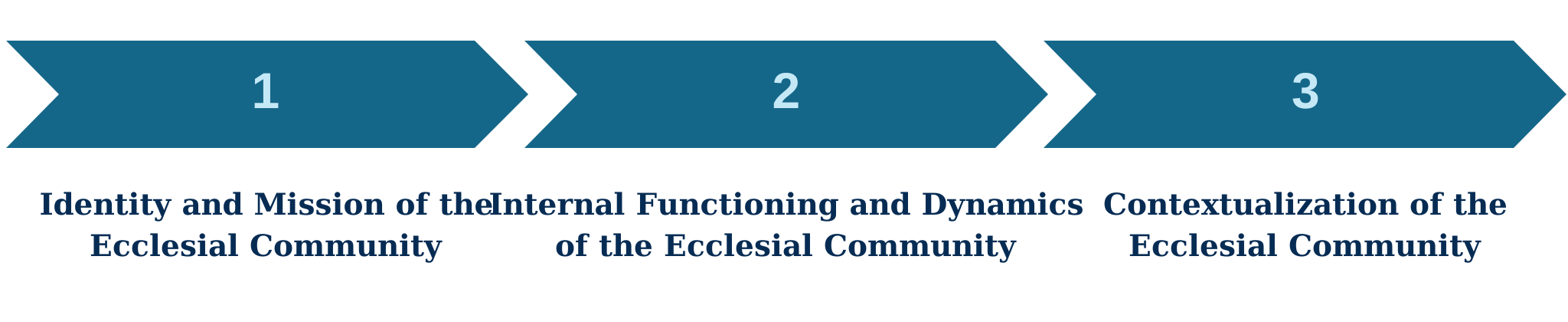
The research associated with Practicum Ecclesiae is organized around three complementary dimensions of the ecclesial community:
- The identity and mission of the churchresearch into the biblical and theological foundations that define the identity, calling, and responsibilities of the ecclesial community.
- The internal functioning and dynamics of the ecclesial communityanalysis of the interaction between leadership and organization, community principles and practices, ministry relationships, and processes of church revitalization and development.
- The contextualization of the ecclesial communityresearch into how the church relates to culture, education, migration, transformations generated by the digital environment, and the contemporary legal framework.
Together, these directions provide an integrated framework for understanding the life of the church and developing applied models and resources suited to the needs of ecclesial communities.
Law and Religion
Ecclesiae et Libertas provides the research framework dedicated to church law and religious freedom. Its name expresses the theological, legal, and interdisciplinary orientation of this field, situated at the intersection of ecclesiology, constitutional law, and the relationships between religious communities, the state, and society.
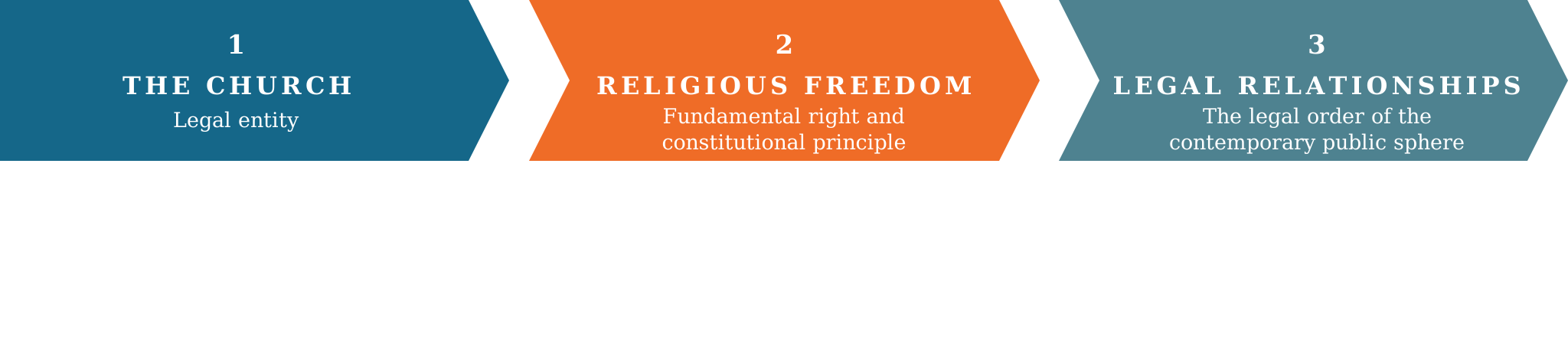
- The church as a legal entitythe legal status, organization, administration, and functioning of churches, denominations, and religious organizations.
- Religious freedomthe analysis of freedom of religion or belief as a fundamental right and constitutional principle, in both its individual and communal dimensions.
- Legal relationships and the public spherechurch–state relations, the manifestation of religion in public life, and the relationship of religious communities to fundamental rights and contemporary democratic values.
Through this initiative, the Center seeks to clarify the legal framework of church life, protect religious freedom, and foster dialogue between theology, law, and society.
LFC
Research Contexts
Research projects are developed both through the formal education programs in which Dr. Daniel Fodorean is involved at bachelor’s, master’s, and doctoral levels, and through collaboration with the Center’s partner institutions.
At the same time, Leader Formation Center conducts independent research projects arising from needs identified in the life of churches, in the formation of leaders, and in the relationship between religious communities and society.
Research findings may be disseminated through studies, academic articles, books, conferences, educational resources, and applied projects, strengthening the connection between research, formation, and ministry.